MikroTik License Levels Explained: RouterOS vs CHR
A MikroTik license is what activates RouterOS, and its level sets how many hotspot users, tunnels and User Manager sessions the device will accept. But before comparing levels, one thing has to be said: if you bought a RouterBOARD, the license is already installed and active on it.
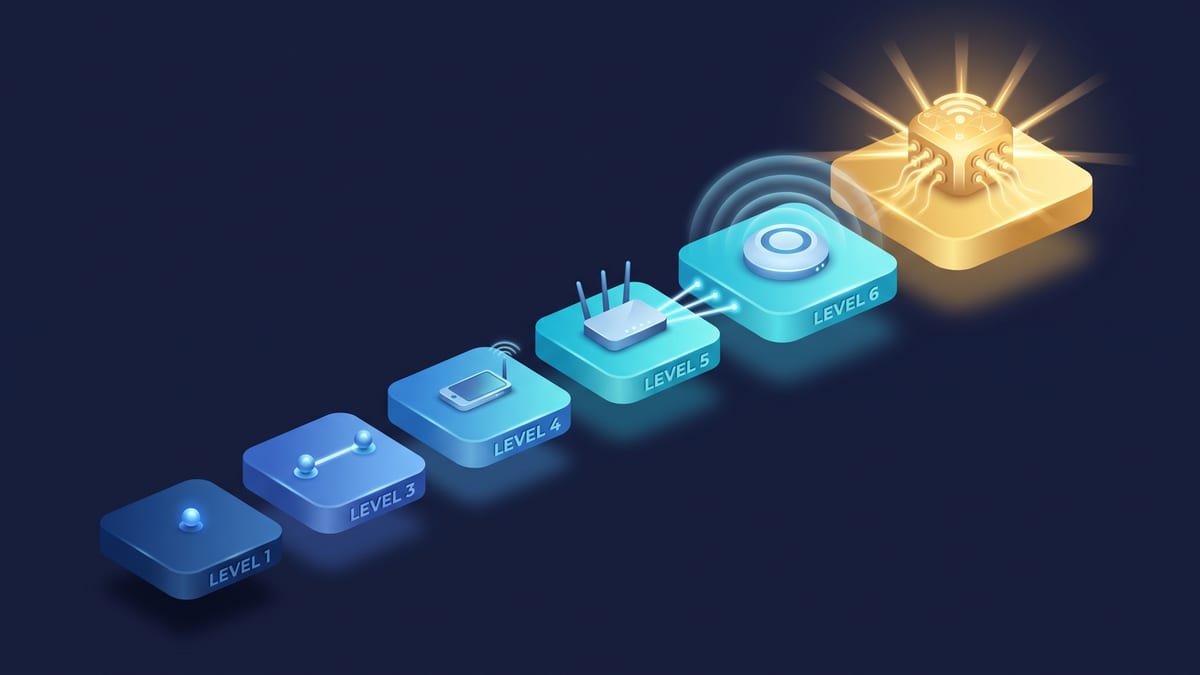
License buying guide
Level 4, 5 or 6 — and when is it CHR?
This article at a glance
- Every RouterBOARD ships with a license already installed; its level is a spec of that model, not an option you pick at checkout.
- A separate license is bought mainly for RouterOS on x86 hardware, or for CHR — the virtual edition.
- MikroTik's official prices: Level 4 is $45, Level 5 is $95 and Level 6 is $250 — the same three prices as CHR's P1, P10 and P-Unlimited.
- Licenses never expire and include unlimited software upgrades, but each one covers a single installation and is bound to that machine's storage.
You do not pick the level — the model does
The most common advice about MikroTik licensing is “buy Level 4 for a small office”. Usually that is advice about a purchase you never had to make. Every RouterBOARD ships with the operating system preinstalled and licensed, and the level is a spec of the model: the hEX comes as Level 4, the hAP ax³ as Level 6. A home router can therefore hold a higher level than an x86 server someone paid $45 for.
So the first move is to look at the level you already have — /system license print in the terminal, or the model's spec sheet on mikrotik.com. Buying only becomes a real question when you install RouterOS on x86 hardware, run CHR on a virtual server, or outgrow the level you were given.
RouterOS licensing: levels 1 to 6
These levels apply to RouterOS on physical hardware, whether a RouterBOARD or an x86 install. Level 0 needs no key and is simply a 24-hour trial. Level 1 is free but requires registration, and pins almost every counter to one. What people actually buy is Level 4 and above.
| Feature | Level 1 | Level 3 | Level 4 | Level 5 | Level 6 |
|---|---|---|---|---|---|
| Official price | Free | Not sold separately | $45 | $95 | $250 |
| HotSpot active users | 1 | 1 | 200 | 500 | Unlimited |
| User Manager active sessions | 1 | 10 | 20 | 50 | Unlimited |
| PPPoE / PPTP / L2TP tunnels | 1 | 200 | 200 | 500 | Unlimited |
| EoIP tunnels, VLAN interfaces, queues | 1 | Unlimited | Unlimited | Unlimited | Unlimited |
| Access-point role | No | New wifi driver only | Yes | Yes | Yes |
Level 3 is not on MikroTik's price list: it is what client and CPE devices ship with, and it cannot be bought for x86 at all. Its access-point role is conditional too — unavailable on the legacy wireless driver, available only on the newer wifi driver in RouterOS 7.
CHR licensing: a separate rulebook
CHR is the virtual edition of RouterOS for VPS, virtual machines and cloud infrastructure, and its licensing shares nothing with the levels above. What you buy here is not features but speed: each tier only raises the upload rate cap on each interface.

| License | Upload cap per interface | Official price |
|---|---|---|
| Free | 1 Mbps | Free |
| P1 | 1 Gbps | $45 |
| P10 | 10 Gbps | $95 |
| P-Unlimited | No limit | $250 |
The free license is not feature-reduced — it runs what the paid tiers run, with the upload rate closed down. For evaluation, all three paid tiers carry a 60-day trial activated through a mikrotik.com account, and cloning an instance does not extend that trial.
Which license is yours?
You own a RouterBOARD
There is nothing to buy. The level is printed in that model's spec sheet — the hEX ships as Level 4, the hAP ax³ as Level 6. If the level is too low you upgrade it; you do not buy from scratch.
RouterOS on x86 hardware
This is where a license is genuinely a purchase. Level 4 covers an office or small network, Level 5 once hotspot or User Manager passes the 200 and 20 caps, and Level 6 for ISPs and heavy traffic.
VPS, virtual machines and cloud
CHR only. Levels 1 to 6 do not apply here. Start on Free, P1 suits most small servers, and P10 or P-Unlimited handle heavy traffic.
You only want to try it
Level 0 is a 24-hour trial that needs no key at all. For CHR, all three paid levels come with a 60-day trial activated through a mikrotik.com account.
The decision that comes first is where it will run. RouterOS on physical hardware is licensed with levels 1 to 6; virtual RouterOS takes CHR licenses only. The two families are not interchangeable.
Check these before you buy
- The key is issued to a mikrotik.com account — create it in your own name, not the reseller's; upgrades and transfers all run through that account.
- Note the device's Software ID before ordering. The license binds to that ID and a mistake is not reversible.
- A RouterOS license binds to storage: internal flash on a RouterBOARD, the disk's MBR on x86. Replacing the disk means losing the license.
- Under MikroTik's licence agreement the licence transfers permanently only together with the hardware itself — you cannot sell it on separately.
- Paid CHR licenses are the exception: they can be moved between instances inside the same account.
- CHR has to reach MikroTik's license server periodically — plan for that on a network with restricted outbound access.
Buying from Iran adds a practical obstacle: MikroTik takes payment by international card, and Iranian bank cards cannot complete that transaction. MikroTik's own agreement also carries a sanctions clause which, for Iran specifically, names equipment or software intended for the monitoring or interception of internet and telephone communications.
Frequently asked questions
Do MikroTik licenses expire?
No. Licenses never expire and include unlimited software upgrades. The one exception is the Level 1 demo license, which lost unlimited upgrades from RouterOS 7.8 onwards.
Can I move a license to another device?
A RouterOS license binds to that machine's storage, and under MikroTik's agreement it transfers permanently only together with the hardware. Paid CHR licenses differ — they can be moved between instances inside the same account.
Where do I buy a Level 3 license?
You do not. Level 3 is what client and CPE devices ship with, and it is not available for purchase separately for x86 at all. Its hotspot cap is a single active user.
How does free CHR differ from the paid tiers?
Only in speed. The free license is not feature-reduced; it caps upload at 1 Mbps per interface. For a full test, all paid levels offer a 60-day trial.
Which level do I need for a 300-user hotspot?
Level 5, because Level 4 stops at 200 active users. But if you also run User Manager, Level 5 caps concurrent sessions at 50 — passing that means Level 6.
Let Rima pay the MikroTik invoice
Rima settles foreign invoices and currency payments on your behalf, from server bills to software purchases. All you need to bring is the license level and the device's Software ID.
See our servicesRead next
Sources